Considerations for Lawyers Professional Liability Insurance
In today's litigious environment, malpractice claims are a fact of life. Securing malpractice (or professional liability) insurance is important to help protect from costly, and potentially devasting, claims.
The Protective Power of Malpractice Insurance
Attorney malpractice insurance can act as a shield to help protect legal professionals from clients’ claims of negligence. While not all states require practicing attorneys to have professional liability insurance, it can offer peace of mind to the insured.
A common misconception is that only large firms need insurance. Solo and small firms can face heightened risks due to limited resources. As a result, the cost of insurance is outweighed by the consequences of not having it—legal fees, settlements, and reputational damage can cripple a
practice.
Benefits of attorney malpractice insurance include:
- Financial protection: Offers coverage of legal fees, settlements, and judgments arising from professional liability claims.
- Client confidence: Having insurance can boost client trust and professional credibility, potentially making your practice more attractive to them.
- Peace of mind. Knowing that you have protection can allow you to focus on your clients and business, without worrying about possible claims.
Risks of Operating Without Malpractice Insurance
Running a practice without insurance can expose firms to significant risk. There may even be professional consequences if your licensing authority requires your firm to have malpractice insurance.
By securing malpractice insurance, you can help protect your practice from unforeseen challenges and ensure its resilience.
Real-Life Impact: What Can Happen Without Insurance
All it takes is one simple mistake. Even the best attorneys are not infallible. You can read more about past scenarios and statistics that underscore the importance of having insurance, and how damage from a single lawsuit can be significant. In times of crisis, this protection can be the difference between recovery and ruin, reinforcing your practice’s capacity to thrive.
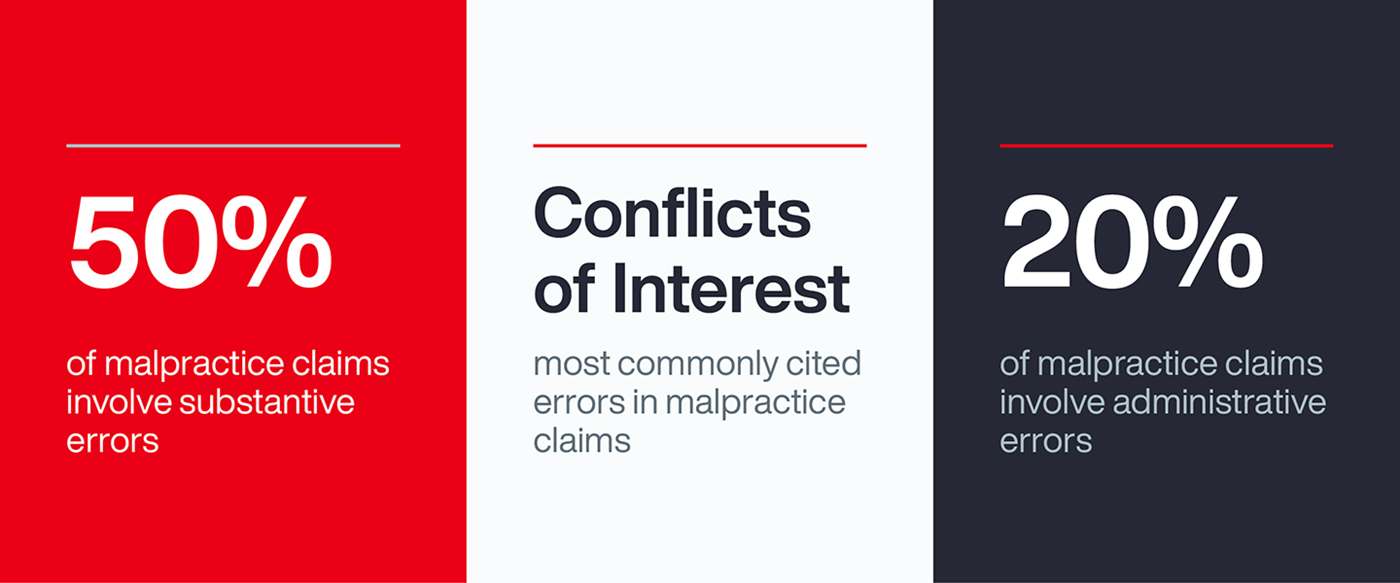
Also consider the types of mistakes that lead to claims:
- Over 50% of claims involve substantive errors.1
- Substantive errors allege that an attorney failed to know or apply the law or carry out adequate investigation/discovery.
- Over 20% of claims involve administrative errors.1
- Administrative errors may include procrastination, failing to calendar, or clerical errors.
- Conflicts of interest are the most commonly cited errors.2
- Not having an effective system in place for screening and preventing potential conflicts of interest could result in a malpractice claim.
 1 American Bar Association. Profile of Legal Malpractice Claims 2020-2023. Sept. 2024
2 Insurance Business Magazine.com. Legal malpractice claims on the rise — study. May 2020.
Selecting Lawyers Malpractice Insurance
Choosing the appropriate malpractice insurance solution involves assessing your practice area and its unique risks. Taking these steps can help:
- Gathering quotes from multiple providers can help you review options
- Also consider engaging an insurance broker to help navigate any policy complexities.
By making an educated decision, you help ensure your practice is protected against legal challenges, to help safeguard your firm’s future.
Questions About Malpractice Insurance?
At
Aon Attorneys Advantage, we provide
answers and support to help you make informed decisions—so you can secure affordable, effective coverage to help safeguard your practice. Learn more by connecting with us today.
This article is provided for general informational purposes only and is not intended to provide individualized business or legal advice.